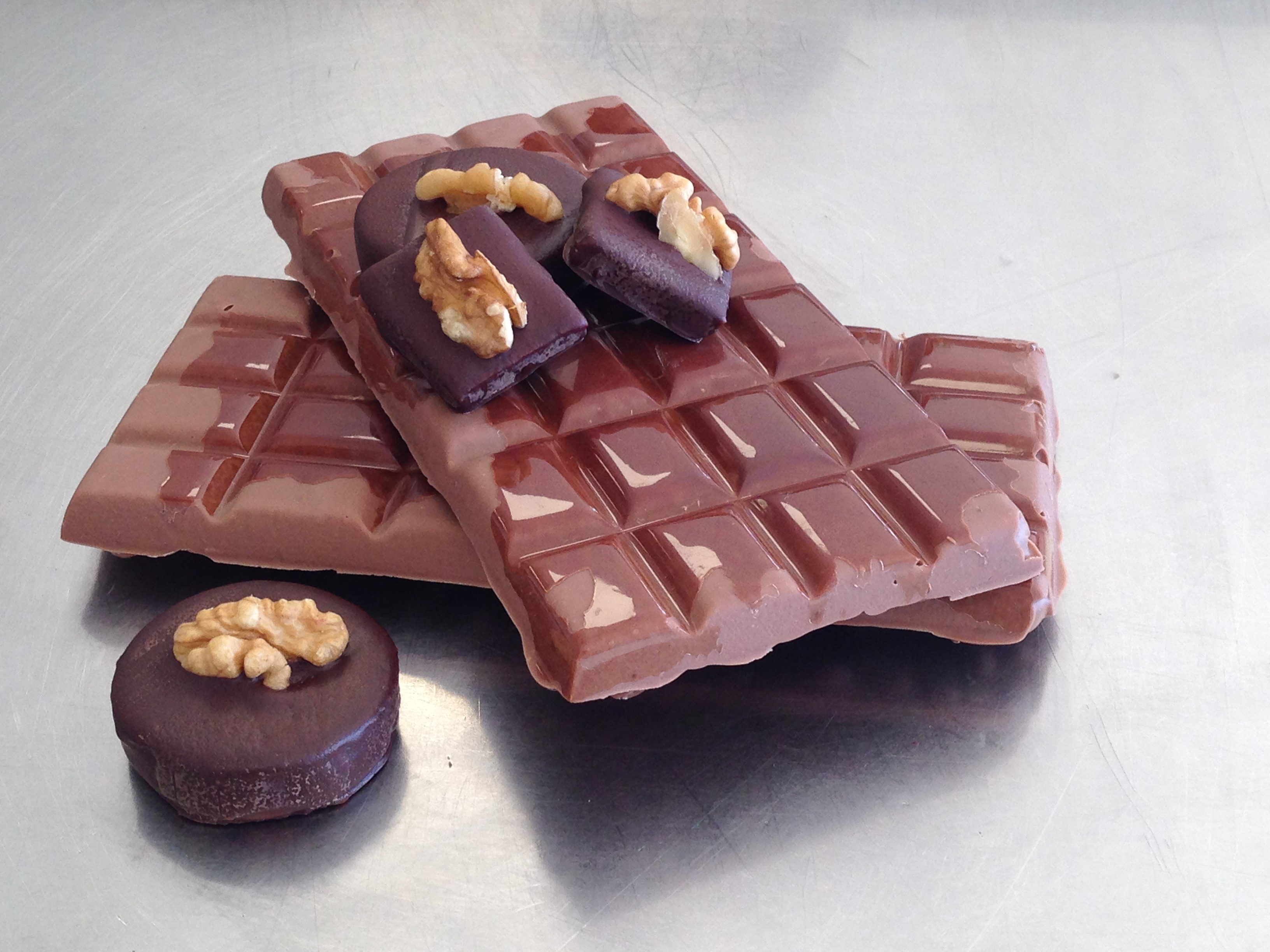
A little late, I know. Last week was chocolate week in pastry and fish week in cuisine. Quite the combination.
The biggest challenge in pastry was learning how to temper the chocolate correctly – I don’t fully know the science behind it (maybe a later post once I’ve done some research), but if you don’t temper the chocolate right, it won’t set and whatever you are making won’t be as pretty or may not turn out at all, depending on what it is. To temper it, you have to heat it up to a certain temperature (which varies, depending on if it’s dark, milk, or white), then cool most of it down by working with it on the table, then heat it back up about 2 degrees by mixing the cool stuff with the remaining warm stuff. Then you make a test piece and put it in the fridge for 4 minutes – if it breaks correctly, you did a good job and you can start working with your chocolate. And you have to work fast or it will get too cool! Whew. Oh, and we didn’t use a thermometer. It was tough and there were definitely some failed attempts, but I think I have it down now and I’m totally going to make chocolate things at home. Chocolate for everyone! Here’s what we made:
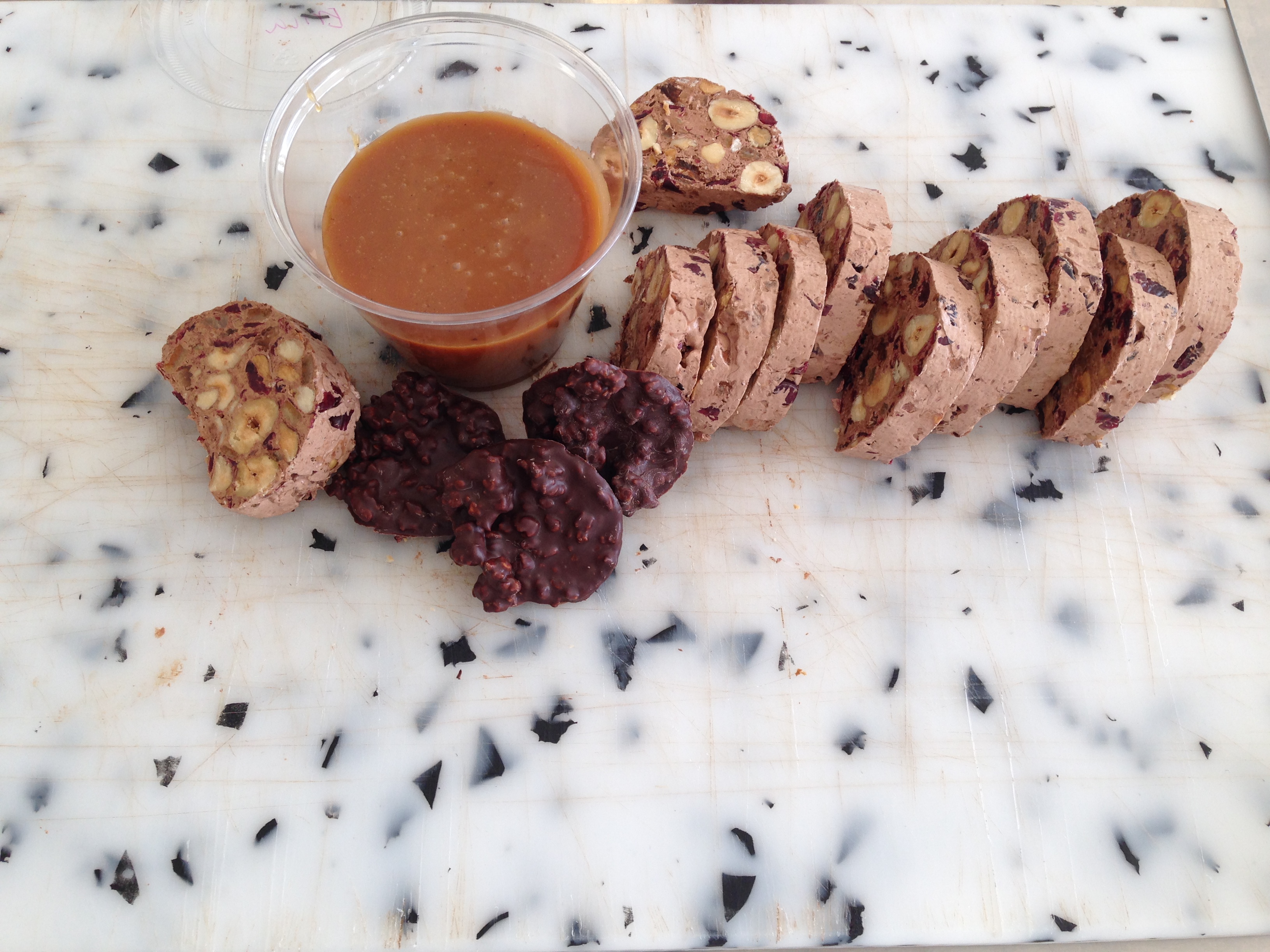
- Caramel Sauce/Dip
- Bonbons which were a praline-chocolate soft center covered in hard dark chocolate and then rolled in powdered sugar
- Mendiants, which were milk chocolate squares with little pieces of dried fruit and nuts on top
- Nougat (like the inside of a 3 Musketeers bar) with cranberries and hazelnuts
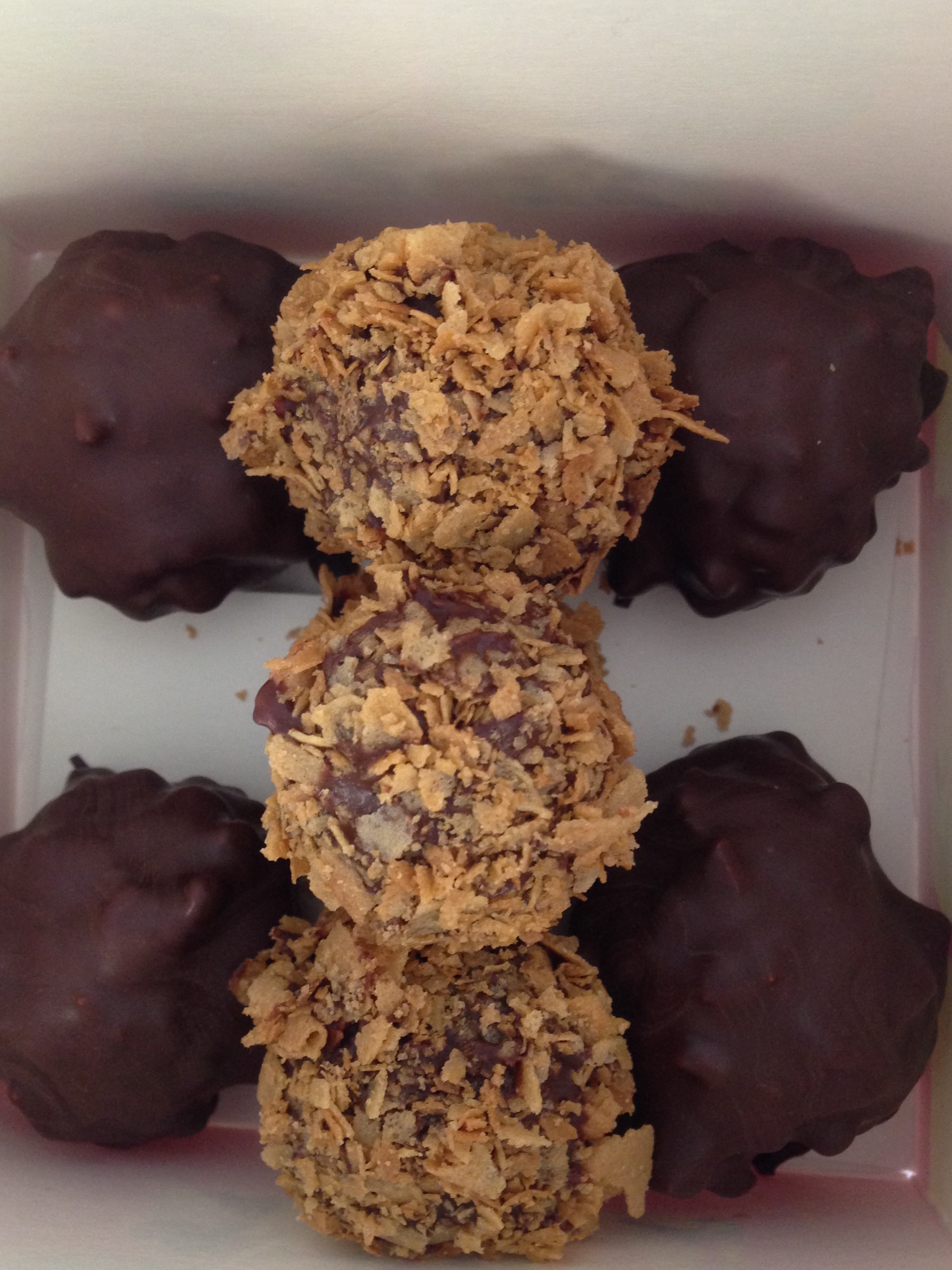
- Rocher chocolates (like the well-known name brand)
- Chocolate crunch bars
- Chopped roasted almonds covered in chocolate, shaped into discs
- Walnut butter/paste cut into discs and covered in chocolate
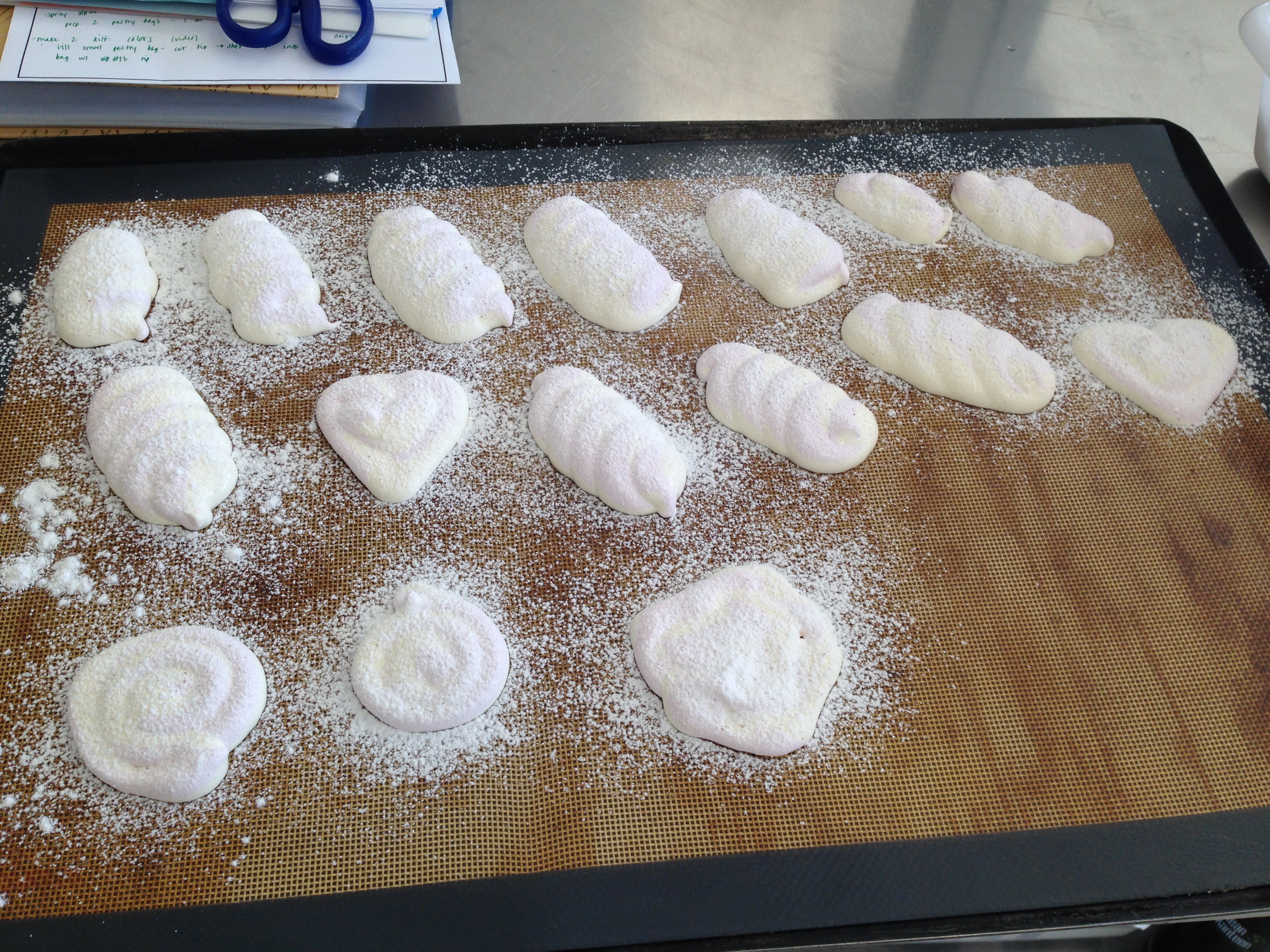
- Marshmallows
Everything was delicious except for the nougat. It is really common in France and you will find it with all different fillings, but it just isn’t my favorite.
In cuisine, we made lots of fish. The hardest part was either pulling the guts out of the fish, or filleting it. It’s definitely a good life skill – next time you go fishing and need someone to make it edible, I’m your gal. We only started with the whole, uncleaned fish once, and then the other times we had cleaned whole fish that we filleted. Also – the room and our uniforms smelled like fish all week. Here’s what we made:
- Sea bream (like sea bass) poached on top of broccoli/cauliflower “semolina”
- Bouillabaisse (fish soup) – a soup with 7 whole fish (not cleaned), simmered for several hours, blended, sieved, and served. It was not good, but apparently costs 50-80 Euro if you order it at a restaurant (which I now know I will never do).
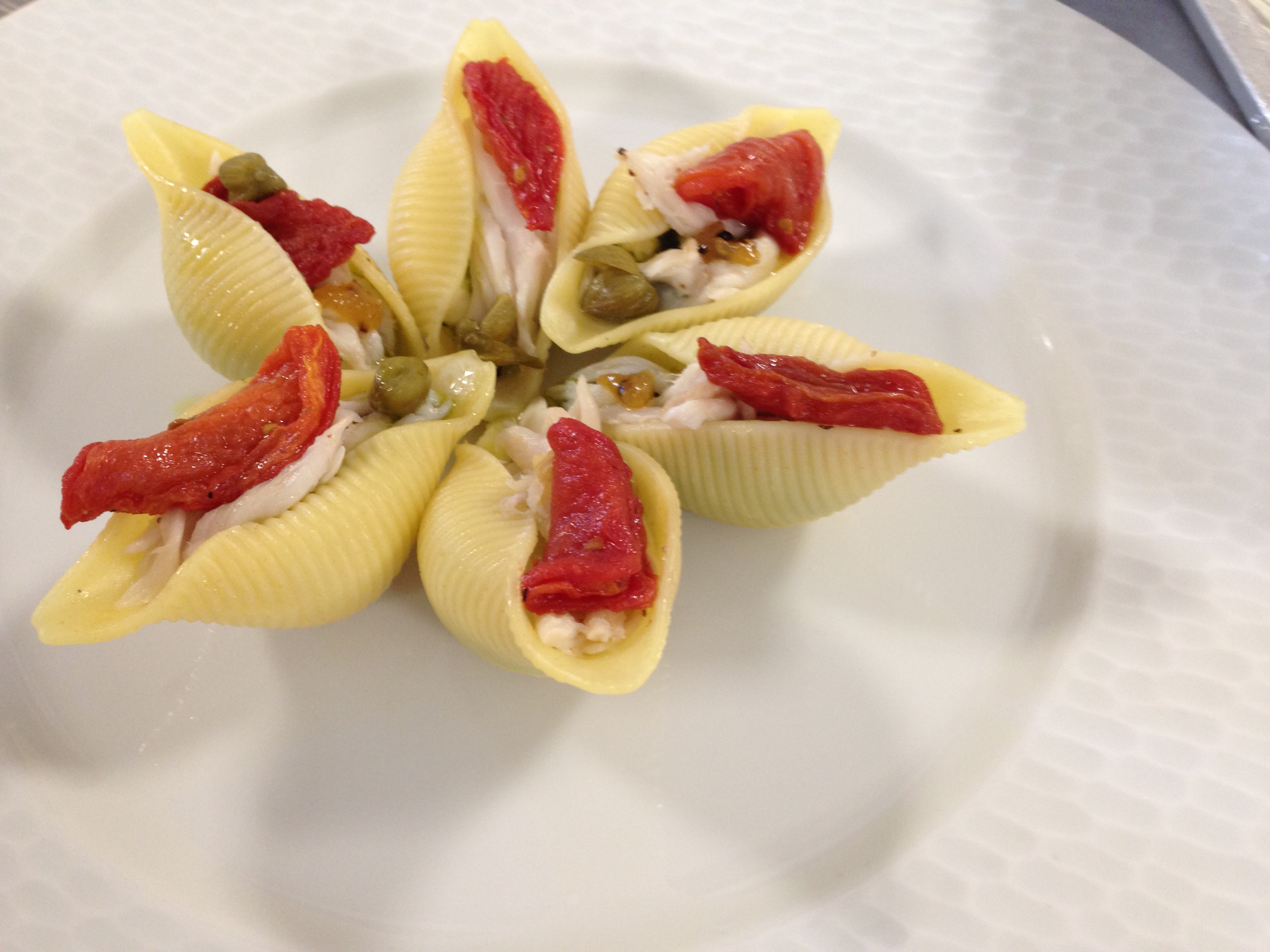
- Pasta shells stuffed with fish mousse, skate (also fish), confit tomatoes, and pesto. Sounds gross, but it was actually pretty good
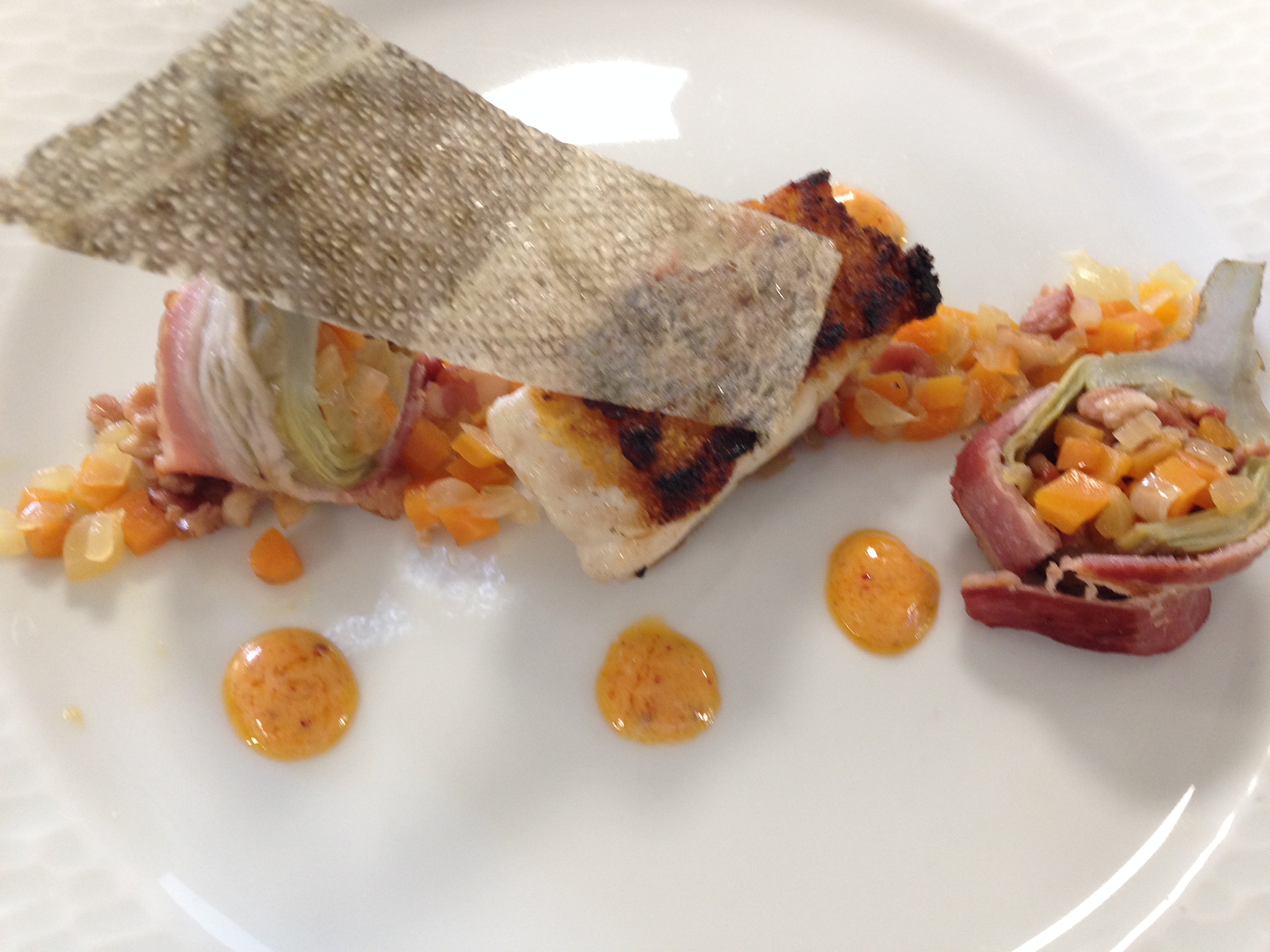
- Cod with a polenta crust, a yummy creme fraiche sauce, and stuffed artichoke wrapped in bacon
- Salmon with hollandaise. The hollandaise was hard – everyone had to make it at least twice – but once we got it, it was so delicious. I’m going to make this over and over again. Yum.
One of the main techniques we used was to put the fish in saran wrap or a vacuum-sealed bag while we cooked it – it helped seal in the moisture and keep the shape. As long as whatever you are cooking it in (oven, hot water) isn’t too hot, it’s okay to use this approach. I might try this at home, but I have had so much seafood over the past three weeks that I think I need a break.
 More Croissants, Please!